FIFA World Cup 2026 · Round of 32
 Spain
Spain3–0
 AustriaSpainAustria
A low block only works if the team behind it can breathe. Austria set up to suffocate space — but a five-man defensive wall means nothing if the six players ahead of it cannot get out from under pressure, and that single flaw decided this Round of 32 tie long before Mikel Oyarzabal's second goal put it out of reach.
Spain's constant manufacturing of a free man — cycling through Rodri, Pedri and Marc Cucurella — turned Ralf Rangnick's compact shape into a stage for their own control rather than a barrier to it. Three themes: Spain's rotating overloads, Austria's stranded back five, and the Cucurella–Baena left channel.
Luis de la Fuente set Spain up in a 4-2-3-1 base that breathed into a fluid 4-3-3 in possession. Rodri, wearing the captain's armband, sat as the double-pivot anchor alongside Pedri, whose job was to carry into the half-spaces and recycle tempo. Álex Baena drifted inside from the right, Dani Olmo linked as the No. 10, Lamine Yamal held the left touchline before cutting infield, and Oyarzabal led the line as a mobile No. 9 timing runs off the last defender. Rangnick countered with a 5-3-2 that stretched toward a 3-1-6 in Austria's rare spells on the ball — Konrad Laimer pushed high on the left, Xaver Schlager and Nicolas Seiwald screening, Paul Wanner between the lines, and Sabitzer and Schmid supporting lone striker Michael Gregoritsch.
De la Fuente's changes arrived late and functional — Merino and Torres refreshing legs at 71, Gavi tightening midfield at 85. Rangnick moved first and moved twice: Grillitsch and Chukwuemeka at the interval, then Kalajdzic and Arnautović on the hour, chasing physicality that never solved the underlying problem.
The mechanism that broke Austria open was not width alone — it was Spain's refusal to let their attacking spine sit still. Rodri stayed fixed as the base, but Pedri stepped forward into the half-spaces on nearly every sustained possession, dragging Austria's midfield three out of shape and opening lanes into Baena and Oyarzabal between the lines. With Austria's wide men occupied tracking Yamal and Baena's inward runs, Cucurella repeatedly overlapped into space that should not exist for a starting left-back. Spain's 64–65% possession and 91% pass accuracy weren't passive control — they were the byproduct of this constant relocation of numbers, funnelling 295 passes into Austria's half against only 275 in their own.
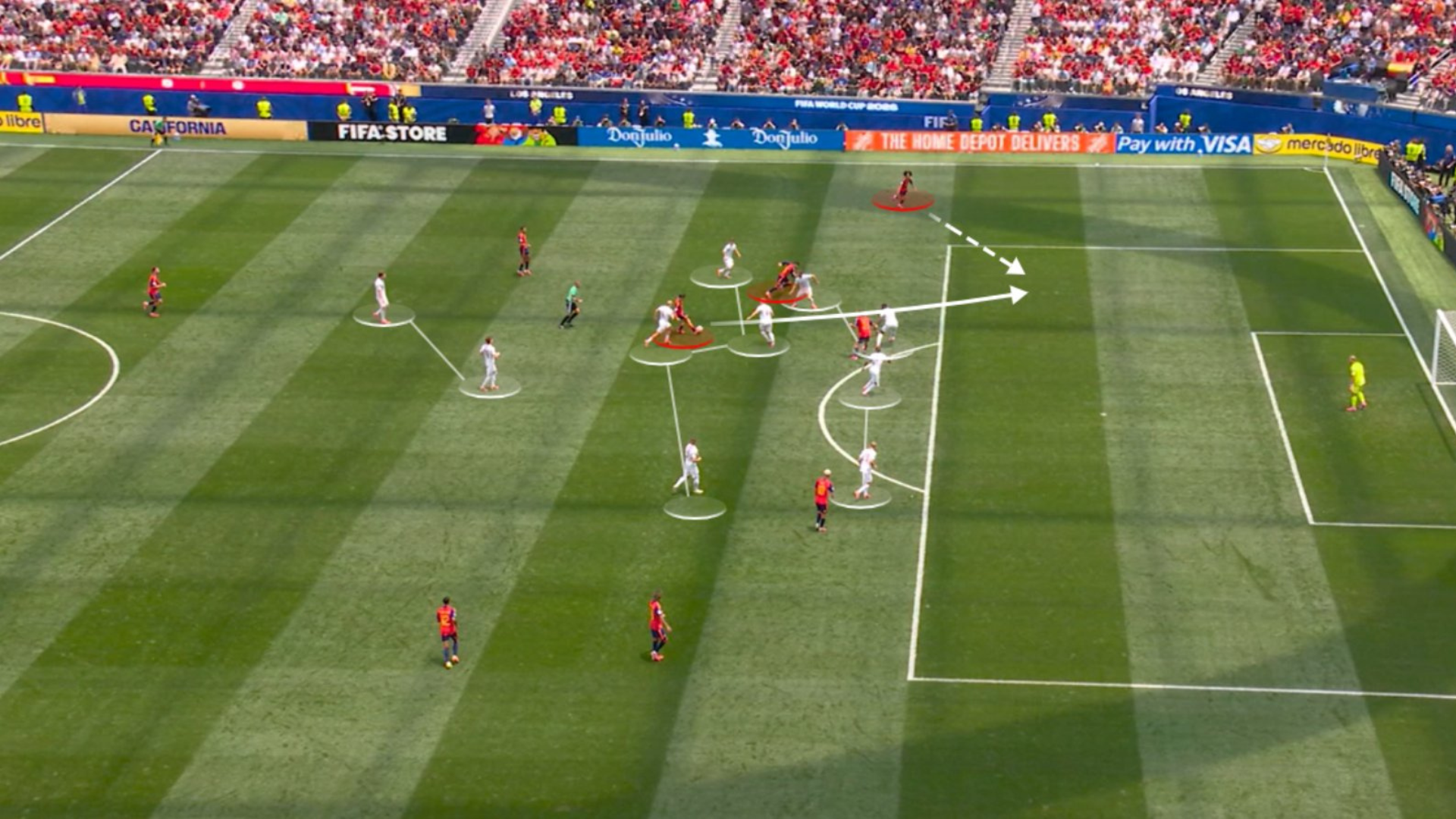
Rangnick's low block was disciplined in shape but starved of support. The principle was sound — five at the back to deny space in behind, three to screen the centre — but Austria never solved how to progress the ball once they won it. Their 346 passes to Spain's 629 tell part of the story; the split tells more: only 88 of their passes reached Spain's half, against 196 kept in their own defensive third. Wanner was left isolated between the lines with no passing triangle around him, and Spain's front three hunted him relentlessly. Long balls were the release valve — but Austria completed just 38% of them to Spain's 66%, and lost the aerial battle 80–20. Every time they pushed a man higher to support an attack, the exposed back line was punished by Spain's transition speed.
If there was a single most productive zone on the pitch, it ran through Spain's left and inside-right combination. Cucurella's bending runs were designed to manipulate Austria's back line, and Baena's drift inside from the right created a diagonal relationship that repeatedly confused Austria's marking. This exact interplay produced the second goal — and the third closed the game on the same unsolved problem.
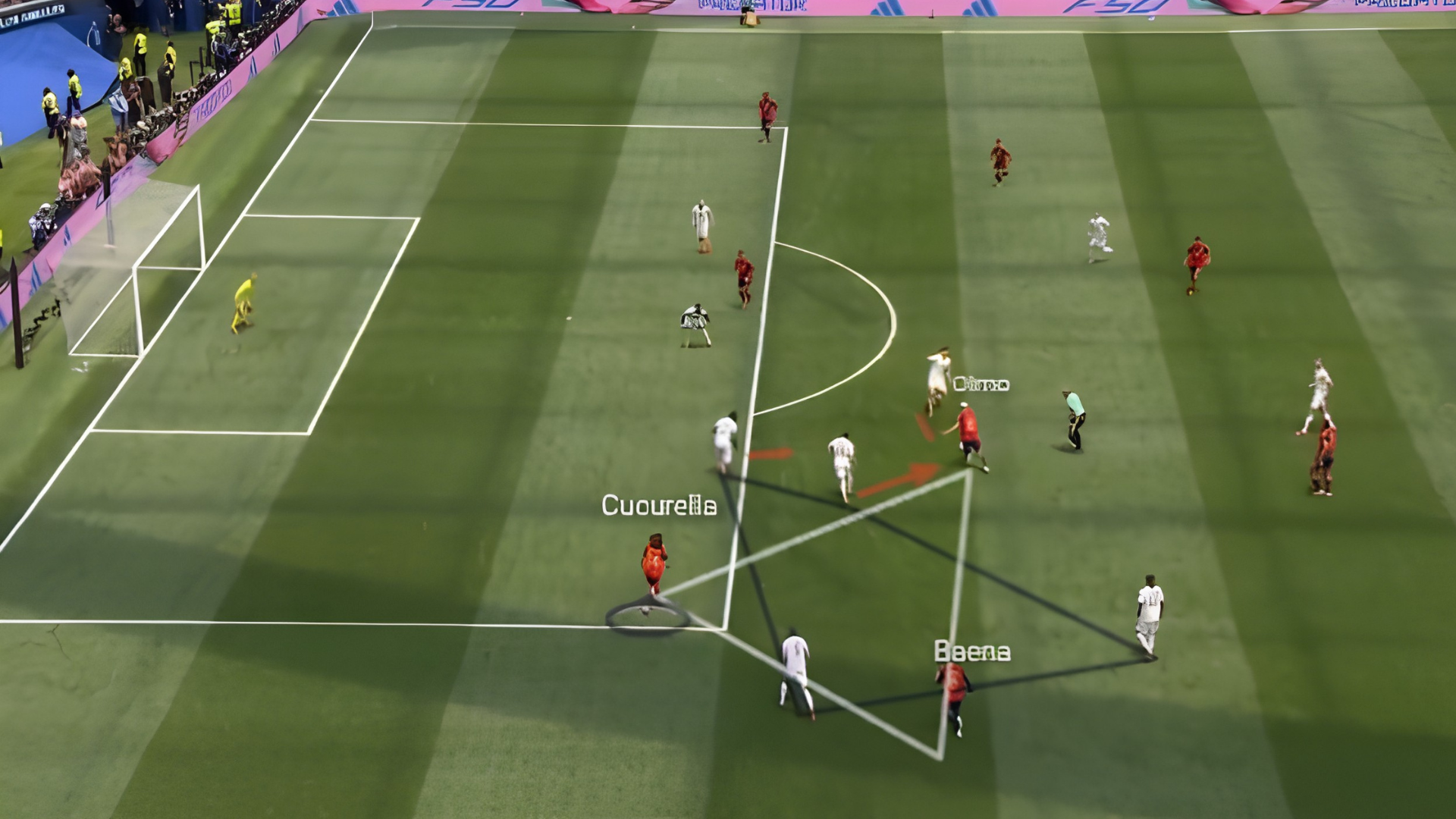
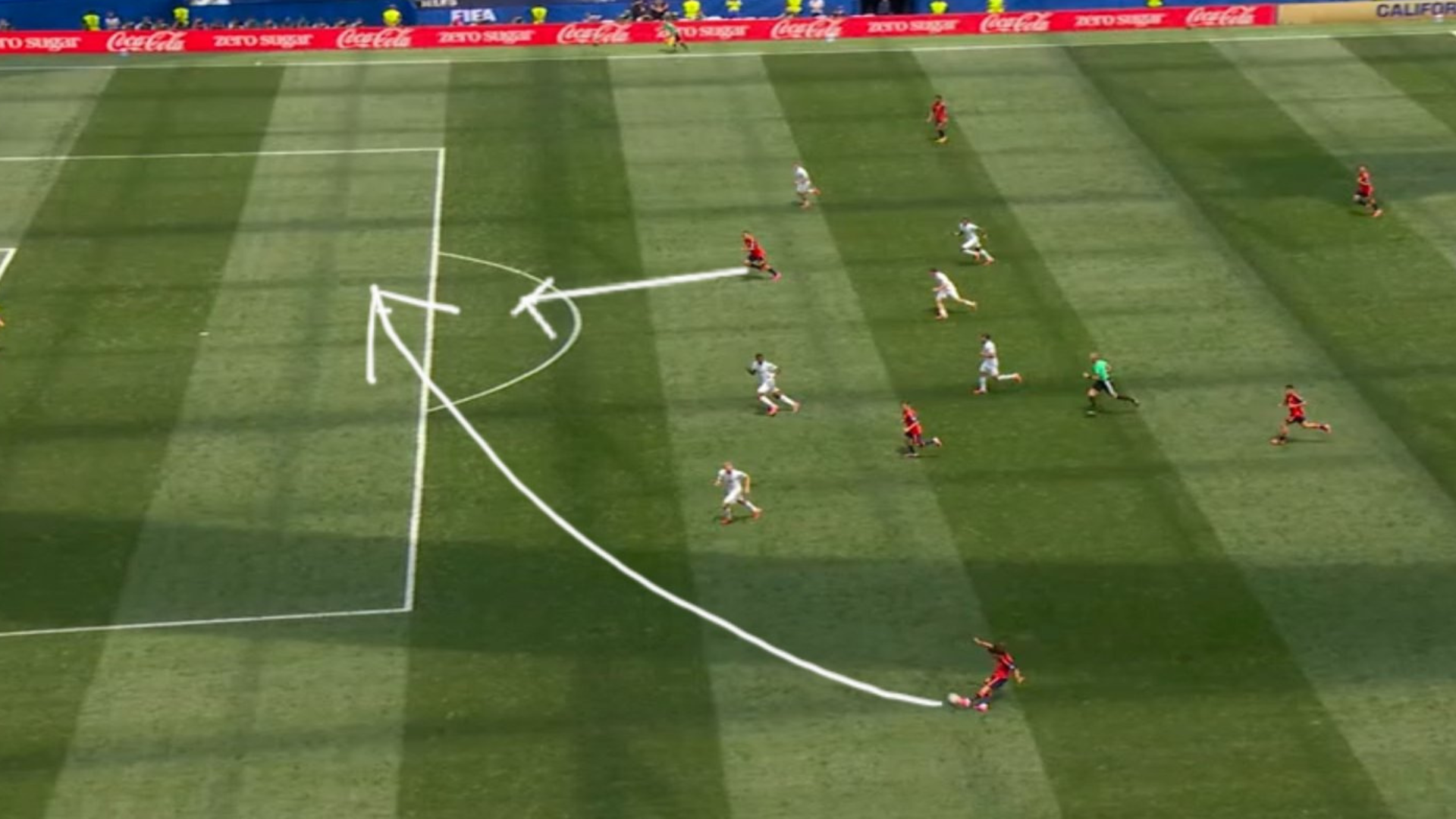
Oyarzabal's opener in the 36th minute mattered most — not simply for the scoreline, but because it validated Spain's spacing before halftime. Austria had held their shape reasonably for the opening half hour, absorbing pressure without conceding a clear sight of goal. Once Spain broke through via the exact mechanism they'd been building — a half-space overload forcing a defender out of position — Austria's second-half response was reactive rather than corrective, and the balance never shifted back.
Rangnick's halftime double, Grillitsch and Chukwuemeka for Xaver Schlager and Seiwald, tried to inject physical presence and win second balls, but it never fixed the structural problem of insufficient support around the ball carrier. The hour-mark introduction of Kalajdzic and Arnautović pushed for direct aerial threat — reasonable, given Spain's grip on the ground — but Austria's aerial win rate stayed low. De la Fuente's changes were management, not adjustment: Merino and Torres freshening tired legs with the lead already secure, Gavi tightening control as the game wound down.
Scored twice — 36' and 89' — timing his movement off Austria's back line so consistently that both centre-backs struggled to track him for ninety minutes.
Headed in the second from Baena's cross; his willingness to attack the box from right-back symbolised Spain's positional courage.
The game's quiet architect — the assist for the third, and bending runs that distorted Austria's shape all night.
Wore the captaincy with the calm of a player who never needed to force it, anchoring the structure so those ahead could gamble forward.
Provided the assist for Porro and was central to the left-sided combinations before making way at 71.
A spectator's evening — zero saves, untroubled behind Spain's control of both penalty areas.
Six saves and the busiest player on the pitch by necessity — the reason the scoreline didn't balloon further.
Led a back three through a difficult night, organising a defence that was rarely given the support it needed from midfield.
This was Spain's tactical idea executed with total clarity — the constant relocation of numbers to manufacture a free man — and Austria never found the collective mechanism to deny it. De la Fuente's side leaves Los Angeles with real tournament credentials: pressing triggers, wide rotations, and control of both penalty areas that suggest this run can go deep.
Rangnick's Austria showed defensive shape without attacking conviction. Unless they solve how to support the ball carrier in transition, their World Cup will be remembered for organisation without end product.